
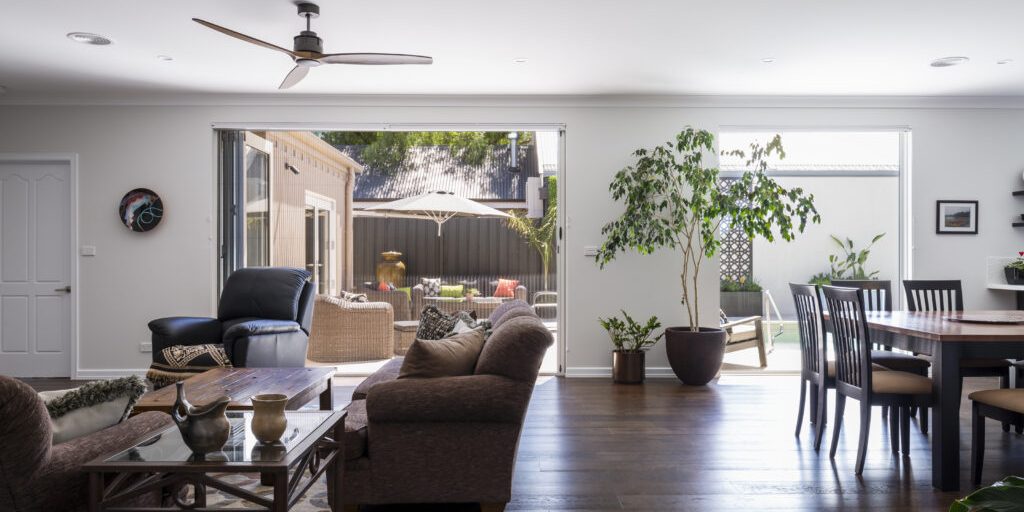
When it comes to selecting flooring for your home, the range of options can be overwhelming and with so many considerations – the price, look & feel, durability, sustainability and health to name a few – it can be a difficult choice. We’ve put together this quick reference guide on the main flooring options to help you navigate the maze and choose the perfect flooring for you and your lifestyle.
1. Carpet – warm and soft
 Carpet is a great choice for areas where you want to create a comfortable soft surface, such as living areas, hallways and bedrooms. Carpets are made from natural materials such as wool, wool blends or from man-made fibres. Nylon is reportedly the most effective carpet fibre for minimising allergies. In addition to the softness and comfort, carpet can also play a role in sound insulation, making it a good choice for absorbing noise on stairs and upstairs areas where hard floors may otherwise create a noise nuisance downstairs.
2. Timber – natural and long lasting
 Timber lasts longer than other flooring options and can be re-sanded several times. Timber flooring is available in different sized boards (in length and width) and parquet squares. It generally comes in 2 thicknesses – 18-20mm (which can be laid directly onto joists) and 12-14mm (which can be overlaid onto plywood on concrete). The timber can be stained in different colours to change the look. Timber flooring is generally more expensive than other options, taking into account the cost of the floorboards and labour costs to install then sand and polish them.
3. engineered boards – cost effective alternative to timber flooring
 Engineered boards are a timber veneer (varying from 2-5mm thick) on top of a plywood substrate. There is a huge difference in quality and generally the thicker the veneer the better the quality. The boards come in a wide variety of timbers and the lengths and widths vary from 1800mm long x 190mm wide to 3000mm long x 300mm wide. They come pre-finished so do not need to to be sanded and polished in situ, reducing labour costs. Some engineered boards can be re-sanded once. Engineered boards are more cost effective than timber and you still get the beautiful natural timber look.
4. laminate – durable and water resistant
 Laminate flooring features a wood grain appearance the same shape and size as wood planks. It is durable, water resistant and cost effective, making it a popular flooring choice for the budget conscious. The upper layer is impregnated with a plastic or resin, bonded to a rigid core, with backing material to prevent the floor from warping. The most popular locations for laminate flooring are the kitchen, family rooms and dining rooms. As the image that is printed on the upper layer is actually a photograph, laminate floors really do look like wood, stone, or other materials.
5. Bamboo – sustainable
 Bamboo is a natural flooring material that looks similar to timber flooring but is produced from a type of grass. The bamboo plant is a renewable resource that grows to maturity in as little as three to five years, much faster than hardwood trees which can take twenty years or more to reach maturity. It is firmer (so more durable), more sustainable and generally costs less than traditional timber, making it an increasingly popular choice for home owners. Be aware though that cheaper bamboo flooring may not have been treated properly and may be more susceptible to expansion due to normal climatic conditions causing it to bow.
6. Vinyl – resilient against scratches and stains
 Vinyl flooring is water, stain and scratch resistant, very durable and affordable making it a popular choice, particularly in kitchens and bathrooms. It is softer and warmer underfoot than tiles and absorbs noise, great for people with children and pets. Vinyl flooring is available as sheets or tiles in a variety of wood styles and colours. Note though that it is more prone to fading than laminate floors and heavy furniture may leave a dent.
7. Hybrid flooring – look and feel of timber but is waterproof
 The best of laminate, the best of vinyl. Multi-layer hybrid flooring is 100% waterproof, so it can be installed in wet areas such as kitchens, bathrooms and laundries. Thanks to its durable textured surface, multi-layer hybrid flooring looks like a timber or laminate floor with the added benefit of being waterproof. Using cutting edge manufacturing technology, the surface layer of each board is finished with a protective coating embossed with a textured timber grain. Hybrid flooring is generally heavier than laminate flooring, so feels more solid underfoot. Good quality hybrid flooring will have a built-in underlay.
8. Tiles – long-lasting and hypoallergenic
 Tiles are very easy to maintain and are stain, water and germ resistant, making them the no. 1 choice for bathrooms and very popular for kitchens, laundries and powder rooms. Tiles are generally cheaper than hardwood flooring but more expensive than carpet. Keep in mind that tiles do not absorb or hold onto heat well, which means they get quite cold on the feet during the winter (but nice and cool in the summer).
What is a Floating Floor?
We’re often asked this question. A floating floor actually describes the method of installing the flooring product, not the product itself. A floating floor does not attach to the sub-floor beneath, rather individual planks or boards are attached to one another. Laminate, vinyl and hybrid floors are generally installed as a floating floor, it is not possible to use this installation method for other timber flooring options. Because it is a very easy installation method, a floating floor is a cost effective flooring option.
Bonus Tip:
Underlay is a wise investment
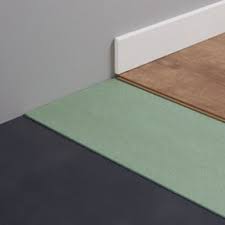 Underlay is often an afterthought when considering flooring options, but it is an integral ingredient for carpet and floating floors that shapes how it feels, wears and looks. The right underlay will increase the comfort level and lifespan of carpet by as much as 50 per cent. Underlay acts as a shock absorber, leveller and sound absorber and will protect your flooring from the normal wear and tear of a busy household, keeping it looking and feeling amazing.
You can also get acoustic underlay for engineered flooring to reduce the noise transfer between floors. Perfect if you’re after the look and feel of engineered boards upstairs but don’t want to hear the kids running around when you are downstairs! Be aware though that it works better if it is integrated with an acoustic flooring/ceiling system, so ask your builder for advice.
Before you select your builder, make sure they are appropriately qualified and experienced professional builders. To help you do this, we have prepared a FREE guide: The 7 Critical Questions to Ask Before You Choose Your Builder.
Download it now to learn:
 How to check whether your builder is up to the job
How to avoid getting caught out by builders charging you more than you were expecting
and more handy tips
HOW TO CHOOSE THE RIGHT BUILDER FOR YOU
|
 |
